Introduction
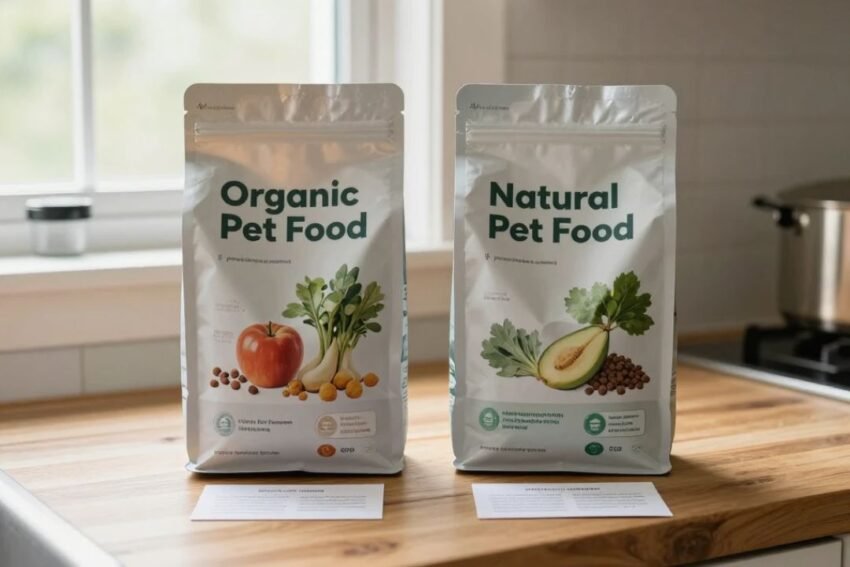
Choosing between organic and natural pet food can be confusing for dog and cat owners. Both terms are commonly used on pet food packaging, but they do not mean exactly the same thing. Many pet owners assume that organic food is automatically healthier or that natural food is always free from artificial ingredients.
The reality is more nuanced.
Both organic and natural pet foods can be suitable choices when they provide complete and balanced nutrition for the correct species and life stage. The best option depends on your pet’s nutritional needs, health, activity level, food preferences, and your own priorities regarding ingredient sourcing.
This guide explains the differences between organic and natural pet food, their potential benefits, important labeling considerations, and how to choose the right option for your dog or cat.
What Is Natural Pet Food?
Natural pet food generally refers to food made with ingredients that meet the applicable definition of “natural” under relevant labeling standards.
Natural pet foods may contain ingredients such as:
- Chicken
- Turkey
- Beef
- Fish
- Eggs
- Rice
- Oats
- Vegetables
- Fruits
- Legumes
Natural does not necessarily mean organic.
It also does not automatically mean that a product is:
- Grain-free
- Raw
- Homemade
- Organic
- Free from every additive
Always read the product label carefully.
What Is Organic Pet Food?
Organic pet food uses ingredients produced according to applicable organic production standards.
Depending on the country and certification system, organic standards may cover:
- Farming practices
- Livestock production
- Processing
- Handling
- Ingredient sourcing
If organic certification is important to you, look for a recognized certification or appropriate labeling information.
Organic vs Natural: Main Difference
The simplest way to understand the difference is:
Natural generally describes the characteristics and processing of ingredients.
Organic generally describes how qualifying ingredients are produced and handled under organic standards.
Therefore, a natural pet food is not necessarily organic.
An organic pet food may also use natural ingredients, but organic certification has additional production requirements.
Is Organic Pet Food Healthier?
Not automatically.
Organic certification tells you something about production practices, but it does not guarantee that the finished food is nutritionally superior.
A conventional pet food can be:
- Complete
- Balanced
- Nutritionally appropriate
- Safe
- Suitable for your pet
Likewise, an organic food still needs to provide appropriate nutrients.
The overall formulation matters more than the organic label alone.
Is Natural Pet Food Healthier?
Natural pet food can be an excellent choice, but “natural” should not be treated as a guarantee of better nutrition.
When choosing natural food, check:
- Protein
- Fat
- Calories
- Vitamins
- Minerals
- Essential nutrients
- Life-stage suitability
- Nutritional adequacy
The word “natural” is only one part of the decision.
Benefits of Organic Pet Food
1. Focus on Production Standards
Organic certification can provide information about how qualifying ingredients were produced.
2. Ingredient Sourcing
Some owners prefer food made with certified organic ingredients because they value specific farming and production practices.
3. Clear Certification
Recognized certification can make it easier for consumers to identify products that meet applicable organic standards.
4. Ingredient Preferences
Organic formulas may include familiar ingredients such as organic meat, poultry, grains, vegetables, or eggs.
Benefits of Natural Pet Food
1. Recognizable Ingredients
Many natural formulas use ingredients that are easy for owners to identify.
2. Wide Variety
Natural pet food is available in many forms, including:
- Dry kibble
- Wet food
- Limited-ingredient diets
- Different protein formulas
3. Flexible Options
Owners can find natural foods designed for puppies, kittens, adults, seniors, and different activity levels.
4. Can Provide Complete Nutrition
A properly formulated natural pet food can provide complete and balanced nutrition.
Organic vs Natural Pet Food for Dogs
Dogs can thrive on a variety of complete and balanced diets.
When comparing organic and natural dog food, consider:
- Age
- Weight
- Activity
- Breed size
- Body condition
- Health
- Calorie requirements
An active working dog may need different nutrition from a sedentary indoor dog.
Organic vs Natural Pet Food for Cats
Cats have unique nutritional requirements.
As obligate carnivores, cats require specific essential nutrients and amino acids.
When choosing food for a cat, prioritize a complete and balanced feline diet rather than simply choosing between organic and natural labels.
Cat food should be specifically formulated for cats.
Organic vs Natural Food for Puppies
Puppies need food formulated for growth.
A suitable diet should provide appropriate:
- Protein
- Fat
- Calories
- Vitamins
- Minerals
- Essential nutrients
Organic or natural ingredients can be part of a puppy diet, but the food must also meet appropriate growth requirements.
Organic vs Natural Food for Kittens
Kittens grow rapidly and require specialized nutrition.
Their diet should provide:
- Appropriate protein
- Essential amino acids
- Fat
- Calories
- Vitamins
- Minerals
Choose food formulated specifically for kittens rather than focusing solely on whether it is organic or natural.
Organic vs Natural Food for Adult Pets
Healthy adult dogs and cats generally need maintenance nutrition.
Both organic and natural formulas can be appropriate if they provide complete and balanced nutrition.
The choice may depend on:
- Ingredients
- Price
- Pet preference
- Availability
- Calorie requirements
- Owner priorities
Organic vs Natural Food for Senior Pets
Senior pets may require adjustments based on their health and activity.
Some healthy senior animals can continue eating adult maintenance food.
Others may need specialized diets.
Pets with kidney disease, diabetes, digestive problems, or other medical conditions should have dietary changes discussed with a veterinarian.
Ingredient Comparison
Both organic and natural pet foods can contain ingredients such as:
| Ingredient Type | Natural Food | Organic Food |
|---|---|---|
| Chicken | Possible | Possible if certified organic |
| Beef | Possible | Possible if certified organic |
| Fish | Possible | Possible depending on standards |
| Eggs | Possible | Possible if certified organic |
| Grains | Possible | Possible if certified organic |
| Vegetables | Possible | Possible if certified organic |
The important distinction is how qualifying ingredients are produced and labeled.
Protein in Organic and Natural Pet Food
Protein is essential for dogs and cats.
Common protein sources include:
- Chicken
- Turkey
- Beef
- Lamb
- Fish
- Eggs
- Meat meals
Protein provides amino acids that support muscle maintenance, growth, tissue repair, and other body functions.
However, more protein does not automatically mean better food.
The complete nutritional profile should be considered.
Organic and Natural Dry Food
Dry kibble is convenient and easy to measure.
Advantages include:
- Easy storage
- Convenient feeding
- Simple portion control
- Wide selection
Both organic and natural dry foods are available.
Fresh water should always be accessible because dry food contains relatively little moisture.
Organic and Natural Wet Food
Wet food contains more moisture than dry kibble.
Potential advantages include:
- Higher moisture content
- Soft texture
- Strong aroma
- Feeding variety
Both organic and natural wet foods can be appropriate when they provide complete and balanced nutrition.
Which Is Better for Allergies?
Neither organic nor natural food automatically prevents allergies.
Food allergies are generally associated with specific ingredients or proteins.
For example, if a pet is allergic to chicken, switching from conventional chicken to organic chicken would not necessarily solve the problem.
If you suspect a food allergy, consult a veterinarian for appropriate evaluation.
Which Is Better for Digestion?
There is no universal answer.
Digestive health depends on:
- Individual tolerance
- Ingredient composition
- Fiber
- Fat
- Portion size
- Overall diet
Some pets may do well on natural food, while others may need a specialized veterinary diet.
Persistent vomiting or diarrhea should be evaluated by a veterinarian.
Which Is Better for Weight Management?
Neither organic nor natural food automatically produces better weight control.
Weight depends largely on:
- Total calorie intake
- Portion size
- Activity
- Body condition
A calorie-dense organic food can still contribute to weight gain if overfed.
Measure portions carefully and monitor your pet’s body condition.
How to Read the Label
When comparing organic and natural food, look beyond the front of the package.
Check:
1. Nutritional Adequacy
Determine whether the product provides complete and balanced nutrition for the intended life stage.
2. Ingredient List
Look at the primary protein sources and other ingredients.
3. Guaranteed Analysis
Check protein, fat, fiber, and moisture information.
4. Calories
Compare calories per cup, can, pouch, or serving.
5. Life Stage
Make sure it is appropriate for puppies, kittens, adults, or other intended stages.
6. Organic Certification
If organic status matters, verify the certification or applicable labeling information.
Price Difference
Organic pet food can cost more because certified organic ingredients and production systems may involve additional costs.
Natural pet food is available across a wide range of prices.
However, expensive food is not automatically nutritionally better.
Set a realistic budget and prioritize nutritional adequacy.
Environmental Considerations
Some pet owners choose organic products because they value certain agricultural and production practices.
However, the environmental impact of pet food is influenced by many factors, including:
- Ingredient sourcing
- Farming methods
- Transportation
- Packaging
- Processing
- Production efficiency
Organic certification alone does not tell you the complete environmental story.
Common Mistakes When Choosing Pet Food
Choosing Only by the Label
“Organic” and “natural” are not complete nutritional evaluations.
Ignoring Calories
High-quality food can still cause weight gain if overfed.
Ignoring Life Stage
Puppies and kittens need growth-specific diets.
Assuming Natural Means Organic
These are different labeling concepts.
Assuming Organic Means Allergy-Free
Organic ingredients can still trigger allergies.
Changing Food Too Quickly
A gradual transition is generally easier on your pet’s digestive system.
How to Switch From Regular to Organic or Natural Food
Introduce the new food gradually.
Days 1–2
Mix a small amount of new food with the current diet.
Days 3–4
Increase the new food.
Days 5–6
Feed mostly the new food.
Day 7
Complete the switch if your pet is tolerating the diet.
Some pets may require a longer transition.
Frequently Asked Questions
Is organic pet food better than natural pet food?
Not automatically. Organic refers to production standards, while natural generally refers to ingredient characteristics and processing under applicable definitions.
Is natural pet food safe?
Yes, when it is properly formulated and provides complete and balanced nutrition.
Is organic food better for dogs?
Not necessarily. A complete and balanced conventional or natural diet can also be excellent for dogs.
Is organic food better for cats?
Not automatically. Cats need species-specific nutrition above all else.
Can organic food prevent allergies?
No. Allergies are generally associated with specific ingredients rather than whether they are organic.
Is organic pet food worth the extra money?
That depends on your priorities and budget. Organic certification may be important to some owners, but it does not automatically mean superior nutritional value.
Conclusion
The debate over organic vs natural pet food does not have one universal winner. Both can be suitable choices when they provide complete and balanced nutrition and are appropriate for your pet’s species, age, activity level, and health.
Organic pet food focuses on ingredients produced according to applicable organic standards, while natural pet food generally focuses on ingredients that meet relevant definitions for natural products.
If you value certified organic production practices, organic food may be worth considering. If you prioritize recognizable ingredients and broader product availability, natural food may be an attractive option.
Regardless of your choice, don’t select pet food based only on marketing language. Check the nutritional adequacy statement, ingredient list, calorie content, guaranteed analysis, life-stage suitability, and feeding instructions.
For puppies and kittens, choose growth-specific formulas. Adult pets generally need maintenance diets, while senior pets may require specialized nutrition depending on their health.
If your pet has allergies, kidney disease, digestive problems, or another medical condition, consult a veterinarian before changing its diet.
Ultimately, the “better” pet food is the one that provides balanced nutrition, appropriate calories, suitable ingredients, and the nutrients your individual dog or cat needs to stay healthy and active.