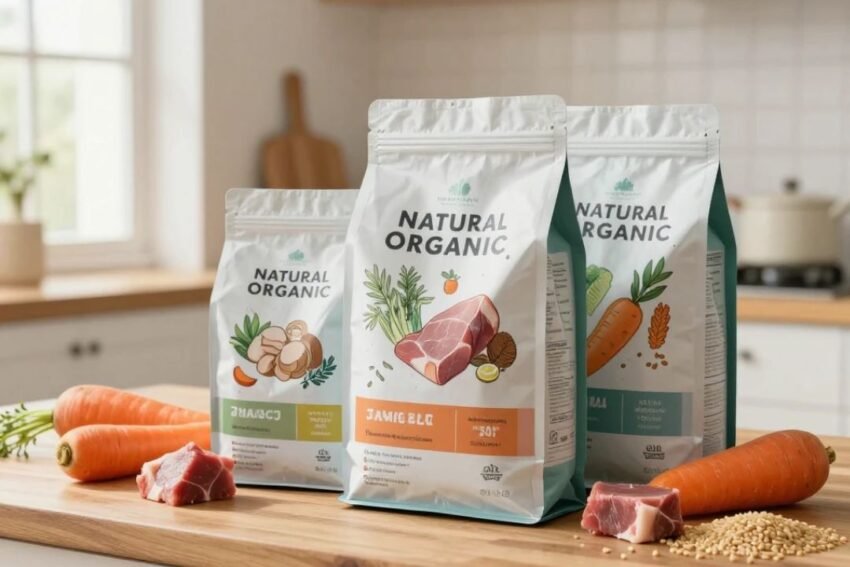
Introduction
Choosing the right food is one of the most important parts of caring for a dog or cat. With growing interest in healthier lifestyles, many pet owners are looking for organic and natural pet food made with carefully selected ingredients.
Terms such as “organic,” “natural,” “holistic,” and “premium” are common on pet food packaging, but they do not all mean the same thing. Understanding these labels can help you make more informed choices.
Organic and natural pet food can be suitable options, but the most important consideration remains complete and balanced nutrition appropriate for your pet’s species, age, activity level, and health.
This guide explains the benefits, ingredients, differences, and important considerations when choosing organic and natural pet food.
What Is Natural Pet Food?
Natural pet food generally refers to products made with ingredients that meet a manufacturer’s or applicable regulatory definition of “natural.”
The exact meaning can vary depending on the market and labeling rules.
Natural pet foods may contain ingredients such as:
- Meat
- Fish
- Eggs
- Vegetables
- Fruits
- Grains
- Legumes
- Natural sources of vitamins and minerals
“Natural” does not automatically mean the food is nutritionally superior.
What Is Organic Pet Food?
Organic pet food uses ingredients produced according to applicable organic production standards.
Depending on the certification system, organic production may involve requirements related to:
- Farming practices
- Crop production
- Livestock management
- Processing
- Handling
- Certification
Organic labeling requirements vary by country, so pet owners should look for recognized certification rather than relying solely on the word “organic” on the package.
Organic vs Natural Pet Food
Organic and natural are not interchangeable terms.
Natural Pet Food
Focuses primarily on the nature and processing of ingredients according to applicable definitions.
Organic Pet Food
Refers to ingredients or products meeting specific organic production and certification standards.
A food can be natural without being organic.
Likewise, an organic product may also use naturally derived ingredients.
Benefits of Organic & Natural Pet Food
1. Ingredient Transparency
Many owners choose natural or organic foods because they want to understand where ingredients come from.
Clear labeling can make it easier to compare products.
2. Carefully Selected Ingredients
Natural and organic formulas may feature ingredients such as:
- Chicken
- Turkey
- Beef
- Fish
- Eggs
- Brown rice
- Oats
- Carrots
- Pumpkin
- Sweet potatoes
The actual nutritional value depends on the complete formulation.
3. Fewer Artificial Ingredients in Some Formulas
Some natural products are formulated without certain artificial colors, flavors, or preservatives.
However, natural does not automatically mean free from all additives.
Always check the ingredient list.
4. Focus on Overall Nutrition
High-quality pet food should provide appropriate levels of:
- Protein
- Fat
- Vitamins
- Minerals
- Essential amino acids
- Fatty acids
- Calories
These nutrients matter more than a marketing claim alone.
Is Organic Pet Food Healthier?
Not necessarily.
Organic certification describes how ingredients are produced and processed according to applicable standards. It does not automatically mean a food is nutritionally superior to a non-organic food.
A conventional pet food can provide excellent nutrition if it is complete and balanced.
The most important question is whether the food meets your pet’s nutritional requirements.
Is Natural Pet Food Better?
Natural pet food can be a good option, but the word “natural” should not be the only factor used to make a decision.
Check:
- Nutritional adequacy
- Protein
- Fat
- Calories
- Life-stage suitability
- Ingredient quality
- Manufacturer information
A balanced diet is more important than a label claim.
Common Ingredients in Organic Pet Food
Organic pet foods may contain certified organic ingredients such as:
Organic Chicken
A common protein ingredient.
Organic Beef
Provides animal-based protein.
Organic Turkey
Another poultry protein source.
Organic Fish
Can provide protein and beneficial fatty acids.
Organic Grains
Depending on the formula, these can include oats, rice, or other grains.
Organic Vegetables
Examples may include carrots, pumpkin, peas, or sweet potatoes.
The presence of organic ingredients does not automatically make a food complete and balanced.
Natural Protein Sources
Protein is essential for both dogs and cats.
Common natural protein sources include:
- Chicken
- Turkey
- Beef
- Lamb
- Fish
- Eggs
Protein supplies amino acids needed for muscle maintenance, growth, and tissue repair.
Cats have particularly specific protein and amino acid requirements.
Organic & Natural Dry Kibble
Dry kibble is popular because it is:
- Convenient
- Easy to store
- Simple to measure
- Available in many formulas
Organic or natural kibble may include animal proteins, grains, vegetables, and other ingredients.
Because dry food contains relatively little moisture, pets should always have access to fresh water.
Organic & Natural Wet Food
Wet food contains considerably more moisture than dry kibble.
Potential benefits include:
- Soft texture
- Strong aroma
- Higher moisture content
- Variety in feeding
Organic and natural wet foods are available for both dogs and cats.
Always follow storage and handling instructions after opening.
Organic & Natural Food for Puppies
Puppies need food specifically formulated for growth.
A suitable puppy food should provide appropriate:
- Protein
- Fat
- Calories
- Vitamins
- Minerals
- Essential nutrients
Choosing organic ingredients does not replace the need for balanced puppy nutrition.
Organic & Natural Food for Kittens
Kittens have unique nutritional needs because they grow rapidly.
A kitten food should provide appropriate amounts of:
- Protein
- Fat
- Calories
- Essential amino acids
- Vitamins
- Minerals
Choose a product formulated specifically for kitten growth.
Organic & Natural Food for Adult Dogs
Adult dogs generally need maintenance nutrition.
Natural or organic adult dog food can be appropriate if it provides complete and balanced nutrition.
Consider:
- Activity level
- Weight
- Breed size
- Body condition
- Calorie needs
Organic & Natural Food for Adult Cats
Cats require species-appropriate nutrition.
A natural or organic cat food should still provide the essential nutrients cats require.
Look for a product formulated specifically for cats and the appropriate life stage.
Organic & Natural Food for Senior Pets
Senior dogs and cats may experience changes in:
- Activity
- Metabolism
- Body composition
- Appetite
Some may benefit from specialized senior nutrition.
If an older pet has kidney disease, diabetes, digestive problems, or another medical condition, consult a veterinarian before changing its food.
How to Read Organic Pet Food Labels
Don’t rely only on the front of the package.
Check:
1. Organic Certification
Look for a recognized certification when organic status is important to you.
2. Nutritional Adequacy
Check whether the food provides complete and balanced nutrition for the intended life stage.
3. Ingredient List
Review the primary ingredients and protein sources.
4. Calories
Calorie content helps determine appropriate portions.
5. Feeding Instructions
Use the manufacturer’s recommendations as a starting point.
What Does “Organic” on the Label Mean?
The meaning depends on the applicable regulatory system.
Different countries can have different requirements for organic labeling and certification.
Therefore, consumers should look for recognized certification and understand what percentage or type of ingredients qualifies the product for its organic claim.
What Does “Natural” on the Label Mean?
“Natural” generally has a specific meaning under applicable labeling standards, but the details can vary.
Don’t assume that natural means:
- Organic
- Grain-free
- Preservative-free
- Raw
- Homemade
- Nutritionally superior
Always read the complete product information.
Organic Pet Food and Allergies
Some owners choose specific ingredient formulas because their pets have food sensitivities.
However, organic ingredients do not automatically prevent allergies.
Dogs and cats can react to particular proteins or other ingredients regardless of whether those ingredients are organic.
If your pet has persistent itching, digestive problems, or other suspected allergy symptoms, consult a veterinarian.
Organic Pet Food and Digestive Health
Some natural formulas contain ingredients such as fiber sources, pumpkin, or other ingredients intended to support digestion.
However, digestive health depends on the complete diet and individual animal.
If your pet experiences persistent vomiting, diarrhea, constipation, or other digestive problems, seek veterinary advice.
Organic Pet Food and Weight Management
Organic or natural food can still contain substantial calories.
Weight management depends on total calorie intake, not whether a product is organic.
Helpful practices include:
- Measure portions
- Limit excessive treats
- Monitor body condition
- Provide regular activity
- Follow veterinary recommendations
Common Mistakes When Choosing Organic Pet Food
Choosing Based Only on the Organic Label
Organic certification does not guarantee that the food is ideal for your pet.
Assuming Natural Means Complete
A natural product must still provide appropriate nutrition.
Ignoring Calories
Healthy ingredients can still contribute to weight gain if overfed.
Ignoring Life Stage
Puppies and kittens need growth-specific diets.
Choosing Based on Marketing Alone
Look beyond words such as “natural,” “premium,” and “holistic.”
How Much Organic or Natural Food Should You Feed?
The correct amount depends on:
- Species
- Age
- Weight
- Activity
- Body condition
- Health
- Calorie density
Use the feeding guide as a starting point.
For more precise portion control, consider weighing food with a kitchen scale.
How to Switch to Organic or Natural Pet Food
Change your pet’s food gradually.
Days 1–2
Mostly the existing food with a small amount of the new food.
Days 3–4
Increase the new food.
Days 5–6
Mostly new food.
Day 7
Complete the transition if your pet is tolerating it.
Some pets may require a slower transition.
Frequently Asked Questions
Is organic pet food better than regular pet food?
Not necessarily. Organic certification describes production standards, while nutritional quality depends on the complete formulation.
Is natural pet food healthier?
It can be a suitable choice, but “natural” alone does not guarantee superior nutrition.
Is organic food safe for puppies?
Yes, if it is specifically formulated for puppy growth and provides complete and balanced nutrition.
Can cats eat organic dog food?
Cats have different nutritional requirements, so they should receive food specifically formulated for cats.
Does organic pet food prevent allergies?
No. Organic ingredients can still trigger an allergic reaction in a sensitive animal.
Is organic pet food more expensive?
It can be more expensive because certified organic ingredients and production processes may involve additional costs.
Conclusion
Organic and natural pet food can be attractive choices for owners who want carefully sourced ingredients and transparent labeling. However, the words “organic” and “natural” should not be viewed as automatic guarantees of superior nutrition.
When choosing pet food, focus first on complete and balanced nutrition, appropriate calories, species, life stage, ingredient quality, and your pet’s individual needs.
Organic food follows specific production standards, while natural food generally refers to ingredients that meet applicable definitions for natural products. These terms describe different aspects of pet food and should not be treated as identical.
Whether you choose organic, natural, or conventional food, select a product formulated specifically for your dog or cat. Puppies and kittens need growth diets, adult pets need maintenance nutrition, and senior animals may require additional dietary consideration.
Always provide appropriate portions, fresh water, and regular exercise. If your pet has allergies, digestive issues, kidney disease, or another medical condition, consult a veterinarian before changing its diet.
Ultimately, the best pet food is not necessarily the one with the most impressive label. It is the food that provides balanced nutrition, appropriate calories, and the nutrients your individual pet needs to stay healthy and active.