Introduction
Dry kibble is one of the most convenient ways to feed a dog. It is easy to store, simple to measure, and available in formulas designed for puppies, adults, seniors, small breeds, large breeds, and dogs with specific nutritional needs.
However, choosing good kibble is only part of responsible feeding. How much you feed your dog is equally important. Overfeeding can contribute to excess weight, while underfeeding may prevent your dog from receiving enough energy and nutrients.
The correct feeding amount depends on your dog’s age, weight, activity level, body condition, health, and the calorie density of the kibble.
This complete guide explains how to measure dry kibble, establish feeding schedules, adjust portions, and avoid common mistakes.
How Much Dry Kibble Should You Feed a Dog?
There is no single portion that works for every dog.
The correct amount depends on:
- Body weight
- Age
- Breed
- Activity level
- Body condition
- Health
- Life stage
- Kibble calorie density
The feeding chart on the package is a useful starting point, but it should not be treated as a universal rule.
Two dogs of the same weight can have different calorie requirements.
Start With the Kibble Feeding Guide
Most dry dog food packages provide feeding recommendations based on body weight.
For example, the package may provide different amounts for:
- Small dogs
- Medium dogs
- Large dogs
- Extra-large dogs
Use these recommendations as a starting point.
Then monitor your dog’s body condition and adjust portions when necessary.
Why Calorie Content Matters
Different kibble formulas can contain different amounts of calories.
This means one cup of one food may provide considerably more energy than one cup of another.
Always check the product’s calorie information when comparing foods.
This is especially important when changing brands.
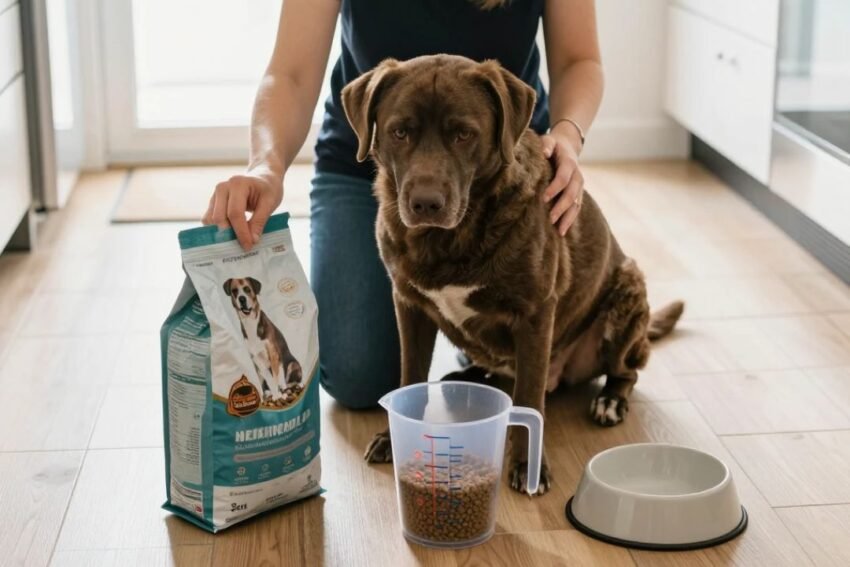
Measuring Kibble With a Measuring Cup
A measuring cup is better than estimating portions by eye.
However, cup measurements can still be less accurate because kibble pieces vary in size and density.
For consistent feeding, use the same measuring method every day.
Measuring Kibble With a Kitchen Scale
A kitchen scale can provide more precise portions.
This can be particularly useful for:
- Small dogs
- Overweight dogs
- Dogs on calorie-controlled diets
- Dogs with medical conditions
- Owners changing between different kibble formulas
Weighing food can make feeding more consistent.
Feeding Puppies
Puppies have different nutritional requirements from adult dogs.
Young puppies generally need more frequent meals because they have small stomachs and high energy requirements.
Depending on age, a puppy may need several meals throughout the day.
As the puppy grows, feeding frequency can gradually decrease.
Puppy Kibble Portions
The appropriate amount depends on:
- Current weight
- Expected adult size
- Age
- Activity
- Kibble calorie density
Large-breed puppies require particularly careful nutritional management.
Use food formulated appropriately for puppy growth and follow veterinary recommendations when needed.
Feeding Adult Dogs
Many healthy adult dogs do well with two meals per day.
A simple schedule might be:
Morning: Half of the daily portion
Evening: Remaining portion
Some dogs may have different schedules based on lifestyle, health, or veterinary recommendations.
Feeding Senior Dogs
Senior dogs can often continue eating two meals per day.
However, aging can change:
- Activity level
- Metabolism
- Body composition
- Appetite
- Health
Portions may need to be adjusted as activity decreases.
If an older dog develops a medical condition, a veterinarian may recommend a specialized diet or feeding plan.
Feeding Small Dogs
Small dogs have relatively small stomachs and may require carefully measured portions.
Even a small amount of extra kibble can represent a significant percentage of their daily calorie intake.
For small breeds:
- Measure portions carefully
- Avoid excessive treats
- Monitor weight
- Consider smaller kibble pieces when appropriate
Feeding Large Dogs
Large dogs can consume substantial amounts of food.
Because of their size, portion accuracy and calorie control remain important.
Large dogs can also benefit from maintaining an appropriate body weight because excess weight can put additional stress on joints.
Feeding Active Dogs
Active dogs may require more calories than sedentary dogs.
This includes:
- Working dogs
- Sporting dogs
- Hiking companions
- Agility dogs
- Highly active outdoor dogs
However, don’t automatically increase food simply because your dog is active.
Monitor weight and body condition to determine whether the current feeding amount is appropriate.
Feeding Indoor Dogs
Indoor dogs may burn fewer calories than highly active outdoor dogs.
This can make overfeeding a common problem.
Helpful strategies include:
- Measure every meal
- Limit unnecessary snacks
- Encourage daily activity
- Monitor body weight
- Choose an appropriate calorie density
How Many Meals Should a Dog Eat?
Feeding frequency depends on the dog’s age and individual needs.
Young Puppies
Several smaller meals may be appropriate.
Adult Dogs
Two meals per day work well for many dogs.
Senior Dogs
Many seniors can continue with two meals, unless health conditions require another schedule.
Free-Feeding vs Scheduled Feeding
Free-Feeding
Free-feeding means leaving food available for the dog to eat whenever it wants.
This may work for some dogs, but it can make calorie control difficult.
Scheduled Feeding
Scheduled feeding involves providing measured portions at specific times.
Advantages include:
- Better portion control
- Easier weight management
- Easier monitoring of appetite
- More predictable routine
For many dogs, measured meals are a practical choice.
How to Adjust Your Dog’s Food
Monitor your dog’s body condition regularly.
If your dog is gaining unwanted weight, the daily calorie intake may need to be reduced.
If your dog is losing weight unexpectedly, the cause should be investigated rather than simply increasing food without guidance.
Your veterinarian can help determine appropriate adjustments.
Treats Count as Calories
Treats are one of the easiest ways to accidentally overfeed a dog.
Common calorie sources include:
- Training treats
- Biscuits
- Dental treats
- Table scraps
- Chews
- Human food
Include these calories when considering your dog’s total daily intake.
Healthy Treat Feeding
Use small portions whenever possible.
You can also use some of your dog’s regular kibble as training rewards.
This allows you to reward your dog without adding as many extra calories.
Dry Kibble and Fresh Water
Dogs eating primarily dry kibble should always have access to clean, fresh water.
Dry food contains relatively little moisture compared with wet food.
Provide water throughout the day and keep bowls clean.
If your dog suddenly drinks significantly more or less than usual, consult a veterinarian.
How to Change Dry Kibble
Changing food too quickly can cause digestive upset.
A gradual transition is usually preferable.
Days 1–2
Mostly old kibble with a small amount of new food.
Days 3–4
Increase the new food.
Days 5–6
Mostly new kibble.
Day 7
Complete the transition if your dog is tolerating it.
Some dogs may require a slower transition.
What Happens If You Overfeed Kibble?
Regular overfeeding can contribute to:
- Excess weight
- Obesity
- Reduced mobility
- Joint stress
- Lower activity
- Other health complications
Even high-quality kibble can contribute to weight gain if fed in excessive amounts.
What Happens If You Underfeed?
Consistently providing too few calories can contribute to:
- Weight loss
- Low energy
- Poor body condition
- Nutritional deficiencies
If your dog is losing weight unexpectedly, consult a veterinarian.
Signs Your Dog Is at a Healthy Weight
A healthy body condition generally means you can feel your dog’s ribs without excessive fat covering them.
Your dog should also have an appropriate waist and abdominal shape when viewed from above and from the side.
Body condition varies by breed, so veterinary guidance can be useful.
Common Dry Kibble Feeding Mistakes
1. Guessing Portions
Estimating food by eye can lead to inconsistent feeding.
2. Filling the Bowl Repeatedly
Repeatedly adding kibble without measuring can cause overfeeding.
3. Ignoring Calories
Different foods have different calorie densities.
4. Too Many Treats
Treats can significantly increase daily calorie intake.
5. Feeding From the Table
Human food can add unnecessary calories and may include ingredients that are unsafe for dogs.
6. Changing Food Suddenly
Rapid changes can cause digestive upset.
7. Ignoring Body Condition
The feeding chart is only a starting point. Your dog’s body condition matters too.
Foods Dogs Should Avoid
Some human foods can be dangerous for dogs.
Examples include:
- Chocolate
- Grapes
- Raisins
- Onions
- Garlic
- Alcohol
- Xylitol
- Certain highly fatty foods
Keep potentially dangerous foods away from your dog.
If your dog consumes something potentially toxic, contact a veterinarian or appropriate animal poison service promptly.
Dry Kibble Storage Tips
Proper storage helps protect food quality.
Keep kibble:
- In a cool, dry place
- Away from direct sunlight
- Away from moisture
- In its original packaging or a suitable sealed container
- Away from pests
Follow the manufacturer’s storage instructions.
When Should You Contact a Veterinarian?
Contact your veterinarian if you notice persistent:
- Weight loss
- Weight gain
- Vomiting
- Diarrhea
- Loss of appetite
- Excessive thirst
- Low energy
- Difficulty eating
Sudden changes in eating or drinking habits can sometimes indicate an underlying health issue.
Frequently Asked Questions
How much dry kibble should I feed my dog?
The amount depends on your dog’s weight, age, activity level, health, body condition, and the calorie density of the food.
Is one cup of kibble enough for a dog?
Not necessarily. Different kibbles contain different calorie amounts, and dogs have different energy requirements.
Should I measure dog food?
Yes. Measuring portions can help prevent accidental overfeeding.
Is a kitchen scale better than a measuring cup?
A kitchen scale generally provides more precise and consistent portions.
How many times should I feed my dog?
Young puppies usually need more frequent meals, while many adult dogs do well with two meals per day.
Should I leave kibble out all day?
Free-feeding can make calorie control difficult for some dogs. Measured meals are often easier for managing portions.
Can I give treats along with kibble?
Yes, but treats should be included in your dog’s overall daily calorie intake.
Conclusion
Following a proper dry kibble feeding guide is just as important as choosing a high-quality food. The correct portion depends on your dog’s age, weight, activity level, body condition, health, and the calorie density of the kibble.
Use the manufacturer’s feeding chart as a starting point, but don’t rely on it blindly. Measure food consistently, monitor your dog’s weight and body condition, and adjust portions when appropriate.
Puppies usually need several meals during early growth, while many adult and senior dogs can thrive on two measured meals per day. Treats should also be counted as part of the daily calorie intake.
Avoid common mistakes such as overfeeding, free-feeding without monitoring, sudden food changes, and ignoring fresh water requirements.
If your dog experiences unexplained weight changes, digestive problems, appetite changes, or other health concerns, consult a veterinarian.
With accurate portions, balanced dry kibble, fresh water, regular exercise, and appropriate veterinary care, you can help your dog maintain a healthy weight and enjoy a long, active life.